Teej — July / September
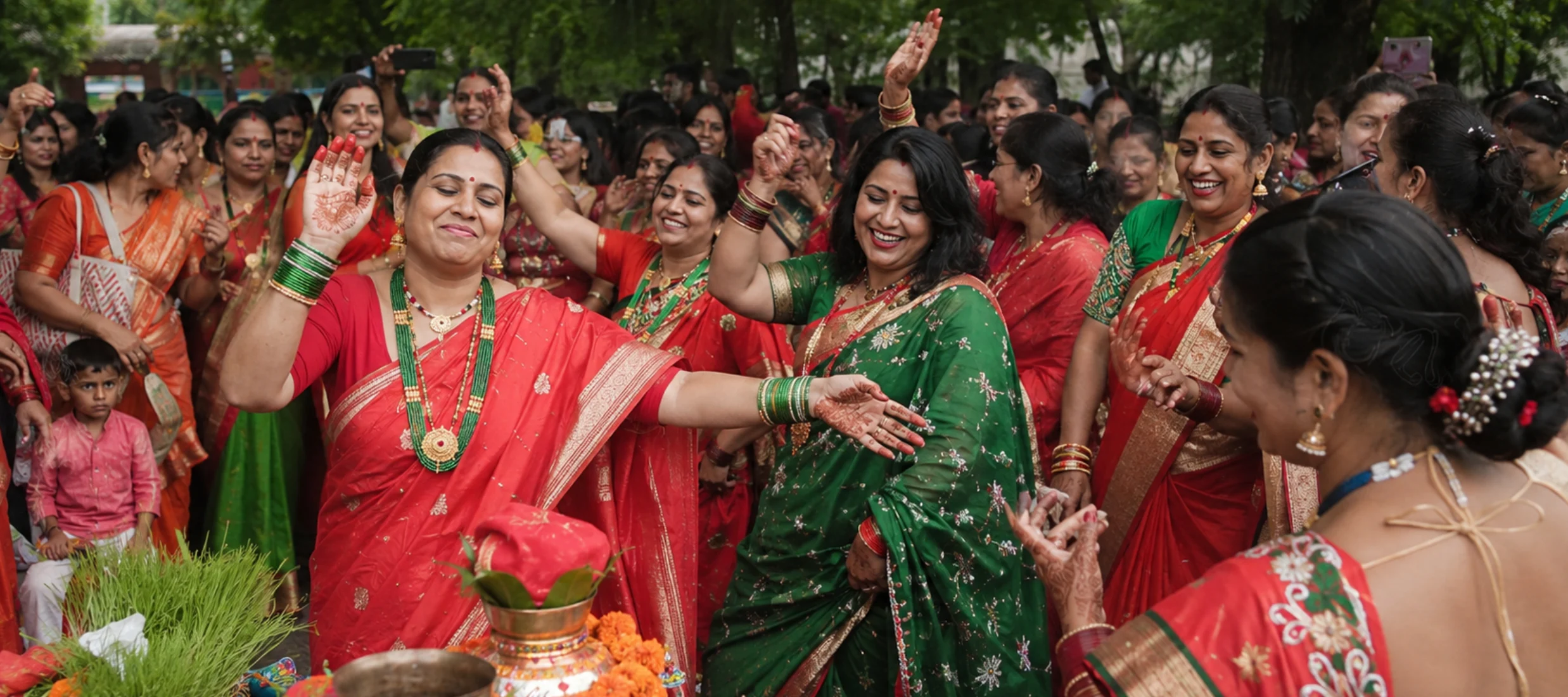
Teej takes its name from a tiny red insect that emerges from the earth with the first rains of the monsoon, and there is something fitting about that origin. The festival, rooted in the devotion of Goddess Parvati toward Lord Shiva, celebrates their divine union and the season that brings the land back to life. According to myth, Parvati fasted for over a hundred years before Shiva accepted her as his wife, making her the enduring symbol of faith and devotion that women invoke during Teej.
Celebrated across Rajasthan, Haryana, Uttar Pradesh, Bihar, and Nepal, Teej is observed as three distinct festivals across the monsoon months. Hariyali Teej in July or August celebrates the greenery of the season. Kajari Teej follows a fortnight later, and Hartalika Teej, the most austere of the three, arrives in August or September.
Across all three, married women fast through the day, often without even water, praying for the longevity and well-being of their husbands, while unmarried women fast in hope of a devoted partner. They dress in red and green, apply fresh mehndi, sing folk songs, and swing on jhulas tied to tree branches. In Jaipur, a grand procession carries an idol of Goddess Parvati through decorated streets.
For visitors, Teej offers a glimpse into a world of feminine solidarity, colour, and song that few other festivals can match.
FESTIVAL ARCHIVE
December +-
November +-
October +-
September +-
August +-
July +-
June +-
May +-
April +-
March +-
February +-
January +-
Follow us on Instagram
@indiabycreative