Hornbill Festival — 1–10 December
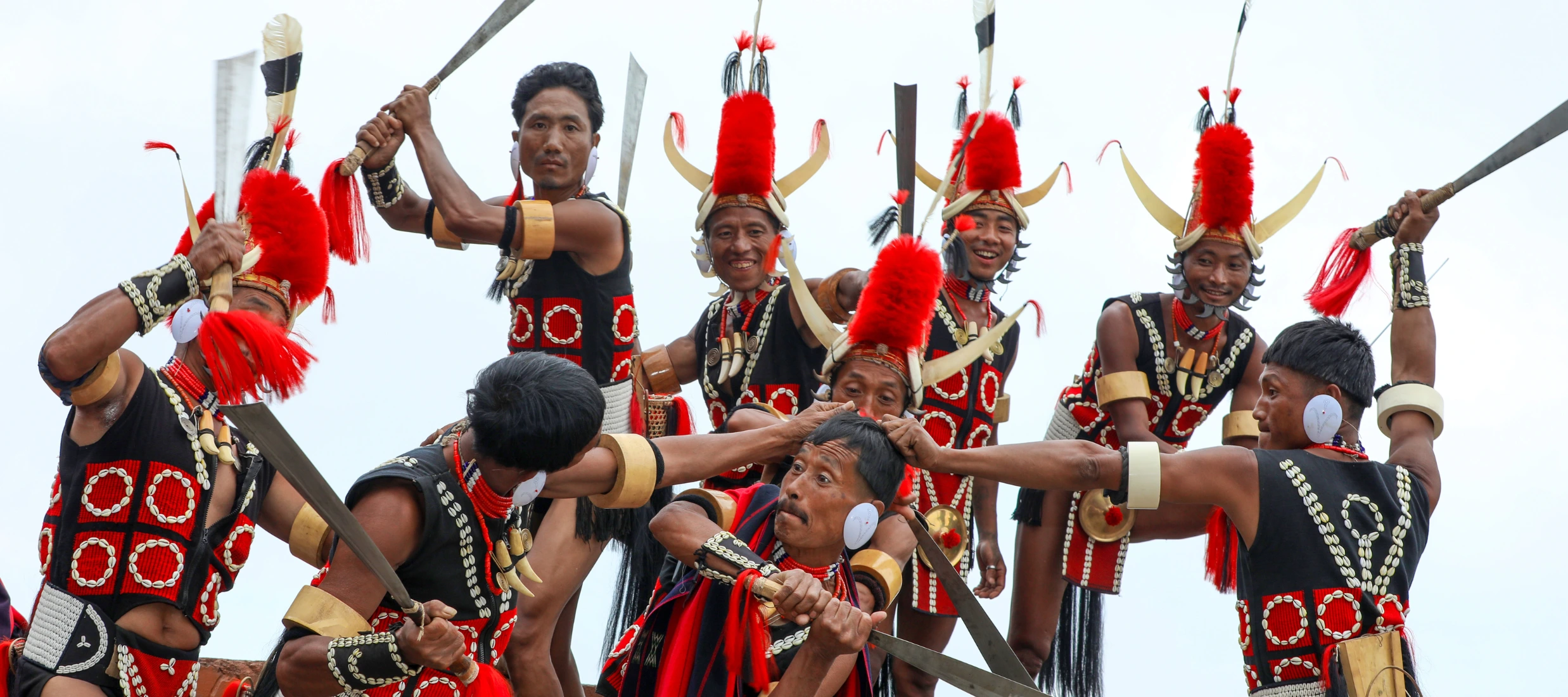
Named after the hornbill, a bird so revered in Naga culture that its feathers adorn the headdresses of warriors and chiefs, the Hornbill Festival is Nagaland’s grandest celebration of itself. Launched in 2000 by the state government to preserve and promote Naga heritage, it has since grown into one of Northeast India’s most anticipated cultural events, drawing visitors from across the country and the world every December.
Held over ten days at the Naga Heritage Village in Kisama, near Kohima, the festival brings all 17 major Naga tribes together under one roof. Each tribe sets up its own morung, a traditional community house, where they perform ancestral war dances and display ceremonial weapons. They showcase the distinct music, costumes, and crafts that set them apart from one another.
Intricately beaded jewellery, hand-woven shawls, bamboo carvings, and wood sculptures line the grounds alongside food stalls offering smoked meats, fermented bamboo shoots, and fiery Naga chillies that are not for the faint-hearted. Traditional games like archery and wrestling sit alongside the now-legendary Naga chilli-eating competition, which draws brave and often tearful volunteers every year.
For visitors, the Hornbill Festival is the rare kind of cultural experience that does not feel staged, because the pride behind it is entirely real.
FESTIVAL ARCHIVE
December +-
November +-
October +-
September +-
August +-
July +-
June +-
May +-
April +-
March +-
February +-
January +-
Follow us on Instagram
@indiabycreative