Makar Sankranti — 14th January
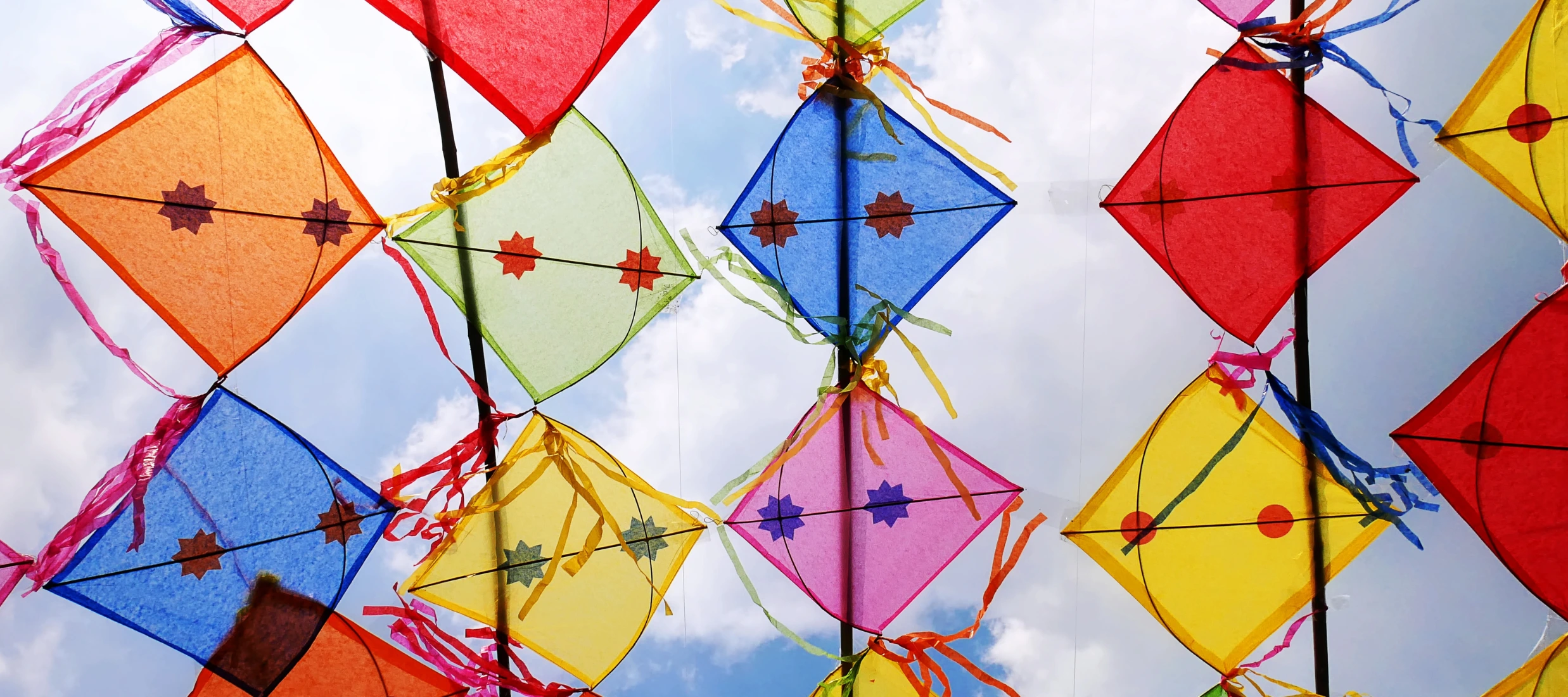
Unlike most Hindu festivals that follow the lunar calendar, Makar Sankranti is fixed to the solar calendar, falling on the day the sun transitions into Capricorn, marking the end of winter and the beginning of longer, warmer days. One of the oldest harvest festivals in the subcontinent, it is observed across nearly every Indian state, though it wears a different name and a different face in each.
In Gujarat and Rajasthan, the sky fills with kites from dawn, with the rooftops turning into arenas of friendly rivalry in what is known as Uttarayan. In Tamil Nadu, it becomes the four-day Pongal, where freshly harvested rice is cooked in clay pots until it overflows, a deliberate, joyful symbol of abundance. In Punjab and Haryana, Lohri bonfires crackle the night before, with families tossing sesame, popcorn, and rewri into the flames. In West Bengal, Makar Sankranti coincides with the Gangasagar Mela, where millions take a holy dip at the confluence of the Ganga and the Bay of Bengal. In Maharashtra, neighbours exchange tilgul, sesame sweets, with the gentle words: “accept this sweetness and speak sweetly.”
For visitors, the same date reveals an entirely different celebration in every corner of the country, which is one of India’s great quiet wonders.
FESTIVAL ARCHIVE
December +-
November +-
October +-
September +-
August +-
July +-
June +-
May +-
April +-
March +-
February +-
January +-
Follow us on Instagram
@indiabycreative